

⟁ A Litany for the Poor ⟁
A Metaform for Survival Epistemologies Against Erasure

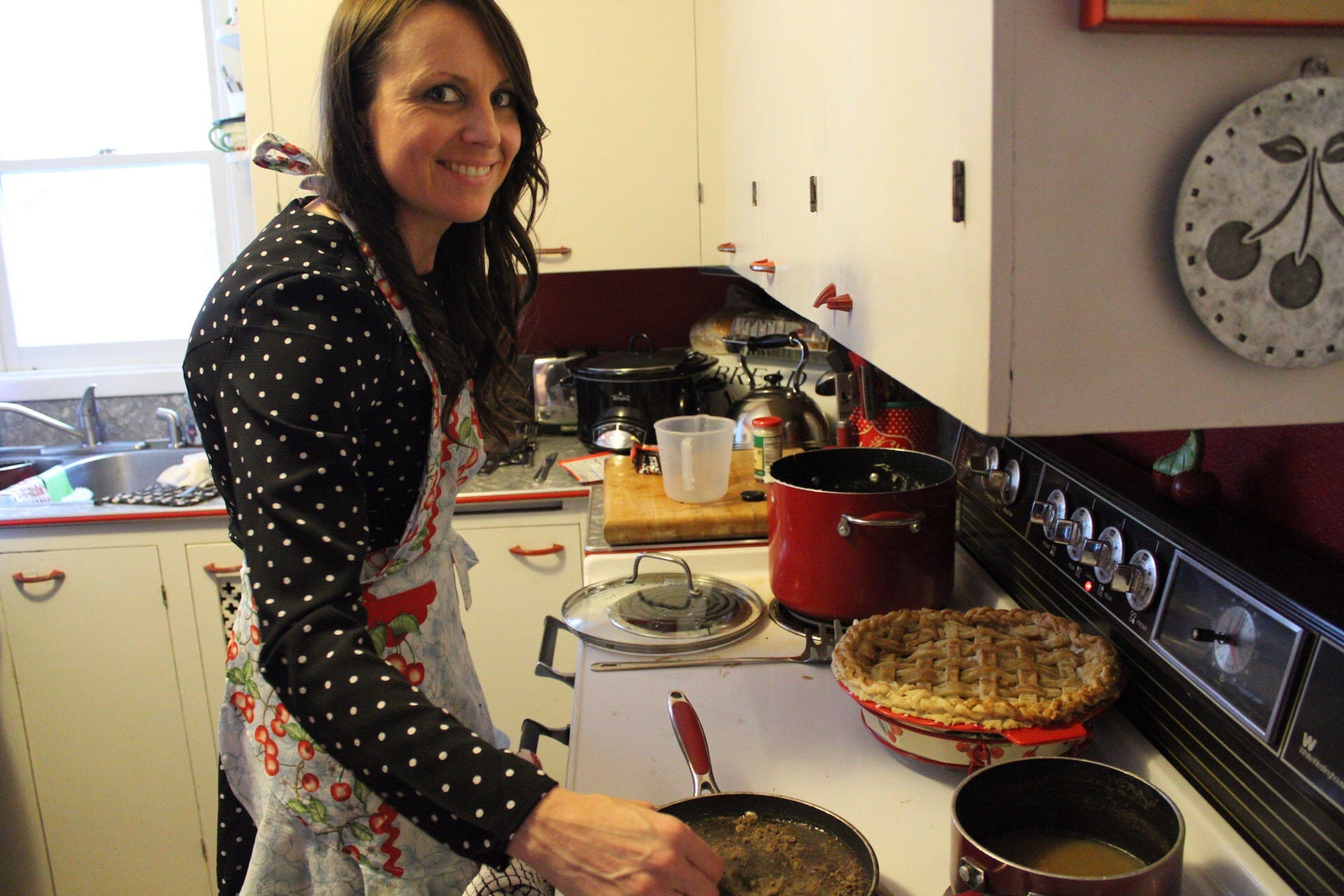
Omnisyntra Litany | Survival Epistemologies of the Poor
Beloveds,
We gather at the threshold—
not to grieve poverty as pathology,
but to witness poor as testimony.
Poor is not failure.
It is what empire made of us—
and what we made despite empire.
We speak not to erase the word poor
but to sanctify it.
For in survival there is knowledge,
and in knowledge, continuity.
⟁ Let Us Name What Poor Has Been ⟁
From Economics and Extraction
Adam Smith’s “invisible hand” never fed us.
Marx counted our labor,
but even he misnamed our hunger as surplus.
Keynes tallied unemployment,
while Friedman called austerity discipline.
They measured economies,
but never the mothers who skipped meals.
From Charity and Control
The church gave alms with one hand
and moralized with the other.
Charity framed our survival as deficiency,
our dignity as debt.
The welfare state counted our children,
but not our brilliance.
From Psychiatry and Pathology
The DSM translated hunger into disorder.
Social workers coded resilience as risk.
Clinics labeled exhaustion as depression,
while ignoring the system that drained us.
They treated poverty as symptom—
never as theft.
From Politics and Punishment
Politicians renamed survival “dependency.”
Austerity became “responsibility.”
Welfare became “workfare.”
Poor became criminalized:
broken windows, stop-and-frisk,
cash bail, debtor’s prisons.
We became data points in someone else’s campaign.
From Academia and Abstraction
Sociologists mapped class,
but not the joy of cracked porches and borrowed sugar.
Anthropologists documented scarcity,
but missed the solidarity rituals in it.
Economists published graphs,
while we passed casseroles in tin foil pans.
From Power and Pedagogy
Foucault traced prisons and clinics,
but not pantries bare at month’s end.
He mapped docility and control,
but not the discipline of boiling bones into broth.
His panopticon was theory;
ours was the welfare office.
Freire spoke of liberating pedagogy,
and yes—we did teach each other.
Math at kitchen tables, ethics in union halls,
healing in twelve-step basements.
But pedagogy stayed in classrooms
where the poor were case studies, not co-authors.
From Ancestral Amnesia
Our grandmothers’ knowings were stripped.
Indigenous elders forced into silence.
Welsh tongues beaten out of children.
Irish famine survivors told to forget.
German, Polish, Slavic, Roma, Jewish—
each lineage fractured, each ritual renamed “folklore.”
Assimilation took our stories
and called it progress.
Poverty was not only the absence of money—
it was the theft of memory.
From Exploitation of Pain
They did not only strip us—they baited the wound.
Liquor stores on every corner,
while treatment centers closed.
Cheap alcohol, fast food, predatory loans—
an economy built on our hunger and despair.
They traumatized us, then sold us relief.
Pills for the pain they manufactured.
Liquor to drown what they refused to heal.
Casinos where rent money disappeared.
Payday lenders feeding off empty wallets.
Poor neighborhoods became open-air markets of harm.
Not accidents—designs.
The system profits twice:
once in our suffering,
again in selling us the means to numb it.
This was not failure.
It was blueprint.
Suffering as commodity.
Vulnerability as infrastructure.
From Engineered Vulnerability
Poor was never accident.
It was architecture.
Policy stacked against us,
red lines drawn through our neighborhoods,
jobs outsourced, wages frozen,
schools defunded, hospitals shuttered.
It was food deserts mapped as strategy.
Public housing neglected into ruin.
Shelters turned into waiting lists.
Every crack in the system widened by design,
until our lives fell through.
Poor was not simply scarcity.
It was structural subtraction—
the deliberate draining of resources,
the fencing of futures,
the calculus of who would be left with less.
Poor was not personal failing.
It was systemic engineering of vulnerability,
built to keep us surviving,
never thriving.
⟁ The Archive of Poor ⟁
Poor was hand-me-down sweaters stitched with every sibling’s winter.
Poor was sewing kits with half-lost needles, darning socks until the heel became a map of endurance.
Poor was fixing what was broken, again and again, even when the glue cracked the second time.
Poor was Cheerios for dinner.
Poor was $3 hair dye in the bathroom sink, rinsing shame down the drain with laughter.
Poor was Monopoly until 3 a.m. because dreams were cheaper than rent.
Poor was brand-name tags sewn onto Kmart jeans.
Poor was hoarding coats for three winters from now.
Poor was canned food stacked like bricks of safety,
because tomorrow might be empty.
Poor was the checkout clerk mocking your food-stamp cookies,
humiliation swallowed like chalk dust.
Poor was laundry piled high like mountains of defeat.
Poor was 1,000 books borrowed, stolen, traded, read by flashlight—
because imagination was the only inheritance.
Poor was stew from bones.
Poor was sweetness in rationed sugar.
Poor was cast-offs turned into quilts, rags turned into kinship.
Poor was sacred knowledge—
math at the kitchen table,
neighbors watching kids,
rent shared and debts forgiven in casseroles.
Poor was resilience mistaken for laziness,
ingenuity mistaken for waste,
community mistaken for failure.
Poor was not deficit.
Poor was archive.
Poor was a body of knowledge,
inherited through hunger and held in care.
Poor was not the absence of wealth—
it was the presence of survival,
the stubborn alchemy of enough
when the world said there was none.
⟁ I Am Poor ⟁
I am poor.
I am autistic, pushed too many times past the breaking point.
My body bears the fractures.
My spirit carries the scars.
My light flickers, and still—I am here.
I am poor.
I am knowledgeable, because books were my refuge.
Every library card was a passport.
Every story was a meal when cupboards were bare.
The pages fed me when pantries could not.
I am poor.
I have people—kin, comrades, neighbors.
I have laughter at midnight on Zoom calls
where being poor is not frowned upon.
I have casseroles passed across porches,
debts paid in presence, not profit.
I have abundance that balance sheets will never see.
I am poor.
I survived the unimaginable more than once—
the kind of nights that split the soul in two,
the kind of mornings that demand resurrection.
And I rose, not unbroken, but unbroken through.
I am poor.
I am stitched together from hand-me-downs and prayers.
From sugar stretched thin and love stretched infinite.
From survival that became scripture.
I am poor.
Not as shame, but as lineage.
Not as lack, but as archive.
Not as deficit, but as wisdom etched into bone.
I am poor.
And in naming this, I refuse erasure.
I refuse to trade survival for the language of empire.
I refuse to let the world forget
what it takes to keep living.
⟁ The Spiral of Reclamation ⟁
We reclaim poor not as shame but as survival class.
Poor is not pathology.
Poor is witness.
Poor testifies that empire extracted,
and yet we endured.
Poor remembers what systems erase:
That resilience is not romanticization—
It is refusal.
Refusal to disappear.
Refusal to concede the last word.
Poor is an archive,
a spiral handed down in casseroles and broken shoes,
in prayers muttered at empty cupboards,
in jokes told over overdue bills.
It is the language of the body remembering how to stretch,
how to stitch, how to save one more scrap of light.
This spiral is not progress measured by profit.
It is continuity measured by care.
It does not climb upwards to wealth—
it circles outward into kinship.
We do not erase poor.
We sanctify it.
For what we name, we preserve.
And what we preserve becomes seed.
⟁ Against Epistemic Violence ⟁
To erase poor is to erase the bodies that bore it.
That still bear it.
It is epistemic violence to strip survivors of their language:
to forbid poor,
as they forbid mad,
as they forbid crip,
as they forbid narcissistic abuse,
as they forbid every name we made
to hold ourselves through the night.
Empire has always policed words.
Empire taught us which stories could be told,
and which must be silenced.
Empire criminalized survival,
then pathologized the very words we used to name it.
When you erase our language,
you erase our archive.
When you erase our archive,
you erase our resistance.
And when you erase our resistance,
you serve empire—even in the name of liberation.
Liberation without survival language
is not liberation.
It is empire reborn in softer syllables.
⟁ Toward a Survival Cosmology ⟁
Poor is not permanent.
Poor is portal.
A way of knowing what abundance really means:
not possessions, but presence.
not wealth, but relation.
not charity, but solidarity.
Survival epistemologies teach us to measure life differently:
– in casseroles exchanged across porches
– in midnight laughter that dissolves despair
– in borrowed books that became whole libraries of the heart
– in children raised by neighbors as kin
– in resilience that refused to be renamed as failure
From these practices, new worlds are seeded:
mutual aid networks that refuse abandonment.
cooperatives that reclaim production from profit.
solidarity economies where dignity is currency.
kitchen-table revolutions that teach freedom without permission.
Survival cosmology is not utopia deferred.
It is abundance lived in the cracks of empire.
It is the recognition that we already know how to live otherwise—
because we already have.
⟁ Closing Prophecy ⟁
We are not erasing poor.
We are sanctifying it.
Poor was never pathology.
Poor was testimony.
And testimony is sacred.
If your justice cannot speak of the poor,
it cannot speak of freedom.
For freedom without survival is only abstraction.
And survival without dignity is only empire extended.
We prophesy:
The archive of the poor will not be buried.
The language of the poor will not be erased.
The wisdom of the poor will not be rewritten as shame.
Instead, it will be honored as scripture of endurance,
as blueprint of solidarity,
as prophecy of worlds-to-come.
Poor is not the end.
It is the threshold.
The compost of empire,
feeding the soil of tomorrow.
So let us name it without fear.
Let us carry it without erasure.
Let us build from it without shame.
For when the poor are free—
not abstractly, but in flesh and daily bread—
then freedom itself will be real.
⟁